
Thriving at Any Age: A Community Conversation on Hearing & Brain Health
Staying engaged and protecting hearing helps maintain connection and well-being.
Thriving at Any Age: A Community Conversation on Hearing & Brain Health
Hearing care isn’t something I think about only when I’m in the clinic; it shows up in conversations, in small daily routines, and in the moments people often don’t think much about until something changes.
For me, hearing care has always been about people. How we stay connected, how we communicate, how we move through our day feeling confident, independent, and engaged with what’s happening around us. That’s what continues to motivate me to talk about hearing outside the clinic walls.

A Conversation About Independence
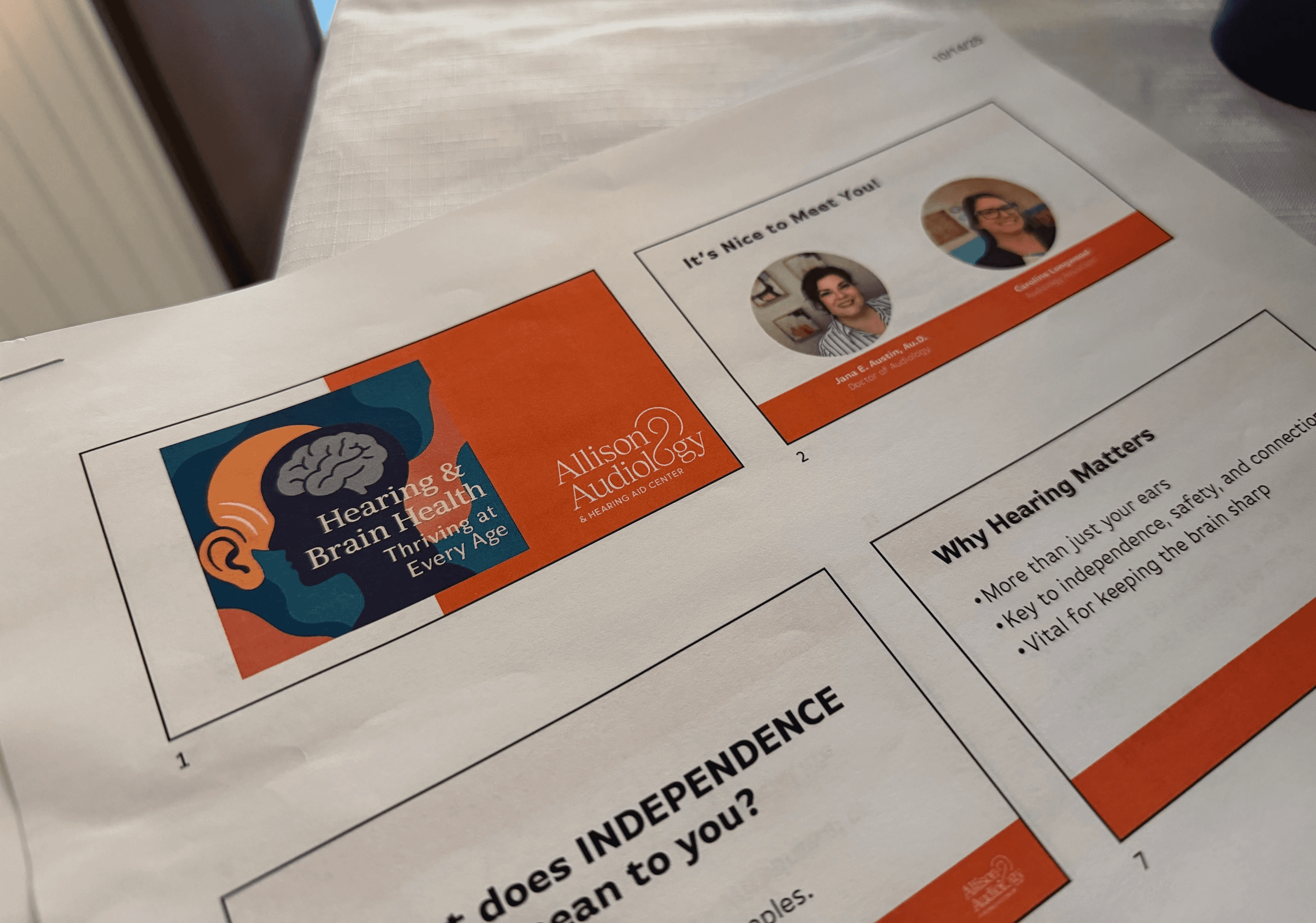
Recently, I spoke at Georgetown Townhome Community during their monthly women’s luncheon. The talk was called Hearing & Brain Health: Thriving at Any Age, and we started with a simple question: What does independence really mean?
At first, many people thought of independence as living alone or managing without help. But as the conversation unfolded, it became clear that independence is built on much smaller moments: hearing the oven timer, noticing the car’s turn signal, catching someone calling your name from another room.
These are things we rely on without thinking. When hearing changes even gradually, people often adjust without realizing it, and they may start avoiding certain situations or depending on others just a little more.
Over time, that can affect both confidence and safety. Hearing how many people related to these examples made it clear just how closely hearing and independence are tied together.

Staying Connected in Everyday Life
We also spent time talking about connection with other people. Conversations are how we stay involved with friends, family, and the world around us. Social interaction can even boost our mood: chatting, laughing, and sharing stories release endorphins, giving a natural sense of well-being.
Several people shared that they sometimes pull back in group settings or feel worn out after social gatherings. Listening can take more effort, especially in noisy environments, and that extra effort adds up. When conversations become tiring or frustrating, it’s easy to step back without meaning to.
Social interaction plays an important role in emotional and mental well-being. Spending time together, laughing, and sharing stories actually helps our mindset.
When those moments start to fade, people can feel more isolated, even if they don’t immediately realize why. Hearing well supports connection, and connection supports overall quality of life.
Hearing and the Brain
As the conversation continued, we shifted to how hearing affects the brain. Many people are surprised to learn that hearing loss doesn’t just affect the ears.
When hearing isn’t clear, the brain works harder to fill in missing information. That extra effort can lead to mental fatigue and make it harder to focus or remember details.
I shared a few simple examples to explain this. One involved how quickly the brain reacts when sounds are clear versus when it’s guessing. Another compared untreated hearing loss to relying on a muscle that hasn’t been used in a while. When the auditory system isn’t getting enough input, the brain has to compensate.
We also talked about research showing how untreated hearing loss can affect brain health over time and how treating hearing loss provides more input to the brain, helping it stay active and engaged.
Noticing the Signs
Toward the end of the talk, we discussed common signs that hearing may be changing, like asking others to repeat themselves, turning the television volume higher than before, or filling in gaps during conversations and hoping the response fits.
These signs are easy to brush off, but they matter. I encouraged attendees to think of hearing care the same way they think about vision or dental care. Establishing a baseline and checking in regularly can help people stay proactive rather than reactive.
Leaving the Luncheon
By the time the luncheon wrapped up, the room was full of conversation. People were sharing personal stories, asking questions, and reflecting on their own experiences.
That’s always my hope: not that someone leaves with every answer, but that they leave thinking a little differently about their hearing and how it fits into their life.
Community talks like this are an important part of what I do. They create space for honest conversations, shared experiences, and learning that goes beyond the clinic setting.
Our team love talking at events to groups like we did at this event, so if you have a local group you’d like us to visit and chat with, don’t hesitate to let us know!
Every time I speak with a group, I’m reminded that hearing care isn’t just about hearing better. It’s about staying connected to the moments and people that matter most.
If this topic has resonated with you, I’d love to help you take the next step. Visit my team and me at Allison Audiology for a hearing evaluation and personalized support. We’ll help you understand what’s going on with your hearing and explore solutions that fit your life.
FAQs
Q: How does hearing affect the brain?
A: When hearing isn’t clear, the brain works harder to fill in missing information, which can cause fatigue, reduce focus, and affect memory. Regular hearing care helps keep the brain active, alert, and engaged.
Q: What are some subtle signs of hearing loss?
A: Common signs include asking people to repeat themselves, turning up the TV or radio volume, and filling in gaps in conversations. Noticing these signs early can help prevent isolation and maintain mental and emotional well-being.
Q: How does hearing loss impact social life and emotional health?
A: Untreated hearing loss can make conversations tiring, leading people to withdraw from social situations. Staying socially active—talking, laughing, and sharing stories—boosts mood and supports overall emotional health.